TED
Political/Legal
Political and legal factors influence how MCM Worldwide operates globally, particularly in relation to trade, regulations, and compliance requirements.
TRADE POLICIES AND TARIFFS
As a global luxury brand, MCM operates across multiple countries and is affected by import/export regulations and tariffs. Changes in trade policies can increase costs, affect pricing strategies, and impact profitability in different regions.
BRAND PROTECTION
MCM heavily relies on brand identity and design. Which means that legal protection against counterfeiting and intellectual property infringement is critical to maintain brand value and exclusivity.
Economic
The luxury fashion industry is highly sensitive to economic conditions, which affects consumer purchase and demand for brands like MCM Worldwide.
ECONOMIC CYCLE AND LUXURY DEMAND
Consumers are more willing to spend on luxury products during periods of economic growth. However, in times like now, when an economic downturn (Mittal,2025) or recession, demand declines significantly as consumers priorities essential spending over non-essential goods such as luxury fashion products.
ACCESSIBLE LUXURY POSITIONING
MCM positions itself as an accessible luxury brand, which allows it to better respond to weaker economic conditions. By offering products that are functional and durable, the brand can attract more value-conscious consumers.
DEPENDENCE ON ASIAN MARKETS
MCM’s strong reliance on Asian markets, particularly in South Korea and China, means that its performance is closely linked to regional economic growth and consumer confidence in these areas.

Social
Social factors strongly influence consumers behaviour in the luxury fashion industry, especially with the rise of younger, digitally active consumers.
RISE OF GEN Z & MILLENNIALS
Research shows that Gen Z and Millennials will roughly account for 75% of luxury purchases in 2026 (Bozic,2026), which now dominate luxury consumption and tend to prefer brands that are digitally engaging, expressive, and socially responsible. MCM Worldwide appeals to these consumers through its streetwear-inspired aesthetics, bold logo designs, and collaborations with celebrities and influencers, particularly K-pop stars.
INFLUENCE OF DIGITAL AND CELEBRITY CULTURE
Social media and influencer culture play a key role in shaping purchasing decisions (Andrew, Esther & Song, 2022). Collaborations with celebrities increase brand visibility and help MCM stay culturally relevant among younger consumers.
GROWING DEMAND OF ETHICAL CONSUMPTION
As consumer awareness increases, there is a stronger expectation for brands to demonstrate sustainability and transparency. MCM is therefore expected to further develop its commitment to responsible sourcing and ethical practices.

Cultural
Cultural factors shape MCM’s brand identity and influence how consumers perceive and engage with the brand.
HYBRID BRAND IDENTITY
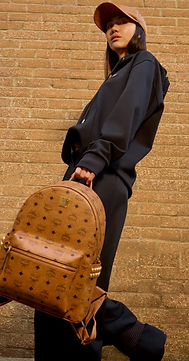
MCM Worldwide combines German Craftsmanship with street culture (Mcmworldwide, n.d.), creating a distinctive positioning in the luxury fashion market. The brand is strongly associated with urban and hip-hop fashion, as well as celebrity, with well-known figures such as Rihanna, Justin Bieber and G-dragon.
INFLUENCE OF POP CULTURE
Celebrity endorsements and cultural relevance enhance brand awareness and desirability, especially among younger consumers who are influenced by global pop culture trends.
LOUD LUXURY TO QUIET LUXURY
While MCM maintains their bold monogram and loud luxury style, it has begun to introduce elements of quiet luxury to appeal to more understated consumers. However, this shift may create a risk of diluting its strong and recognisable identity.

Technological
Technology plays a crucial role in shaping how MCM Worldwide engages with consumers and delivers innovative brand experiences.
DIGITAL TRANSFORMATION & ONLINE ENGAGEMENT
Digital platforms such as e-commerce, social media, and influencer collaborations are essential in the luxury fashion industry. MCM uses these technologies to connect with younger consumers and strengthen its online presence.
IN-STORE AND ONLINE DIGITAL INNOVATIONS
MCM adopts technologies such as Virtual try-on (Mcmworldwide, n.d.) and in-store digital interactions (Videinsight, n.d.) to enhance consumers' experience and create more engaging shopping environments.
INTEGRATION OF AI AND FASHION
MCM’s Spring/Summer 2026 show at Milan Fashion Week combined AI holographic technology with traditional craftsmanship (Markovic,2025), creating an immersive and futuristic runway experience. It reflects MCM’s effort to integrate technology into creative design and storytelling.

EnvironmentaL
Sustainability has become a key issue in the luxury fashion industry, influencing how brands operate, source materials, and communicate with consumers.
CLIMATE COMMITMENTS AND EMISSION REDUCTION
MCM Worldwide has responded by committing to reduce greenhouse gas emissions and achieve net-zero by 2050 (Mcmworldwide, n.d.). The brand also aims to increase the use of renewable energy and improve efficiency across its operations.
SUSTAINABLE MATERIALS AND SUPPLY CHAIN
MCM Worldwide has integrated sustainability into its core operations. As MCM has been free of fur and exotic materials since 2018, and is still working on transforming its product portfolio by 2030. They aim to improve supply chain transparency, which reflects the growing importance of ethical production in the luxury fashion industry (Mcmworldwide, n.d.).
